Trust Accounting vs.
Corporate Accounting
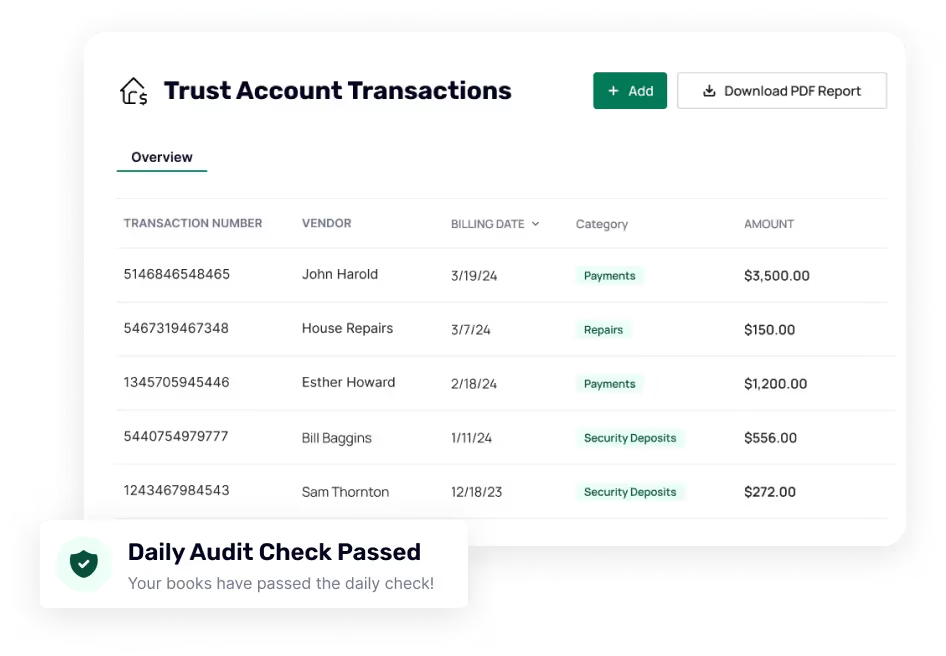
Trust Accounting
This is the backbone of property management compliance. Trust accounting requires tenant and owner funds to be kept in separate bank accounts and reconciled monthly through a three-way reconciliation(bank, book, and subledger). Mistakes here can quickly lead to audits, penalties, or even loss of your license.
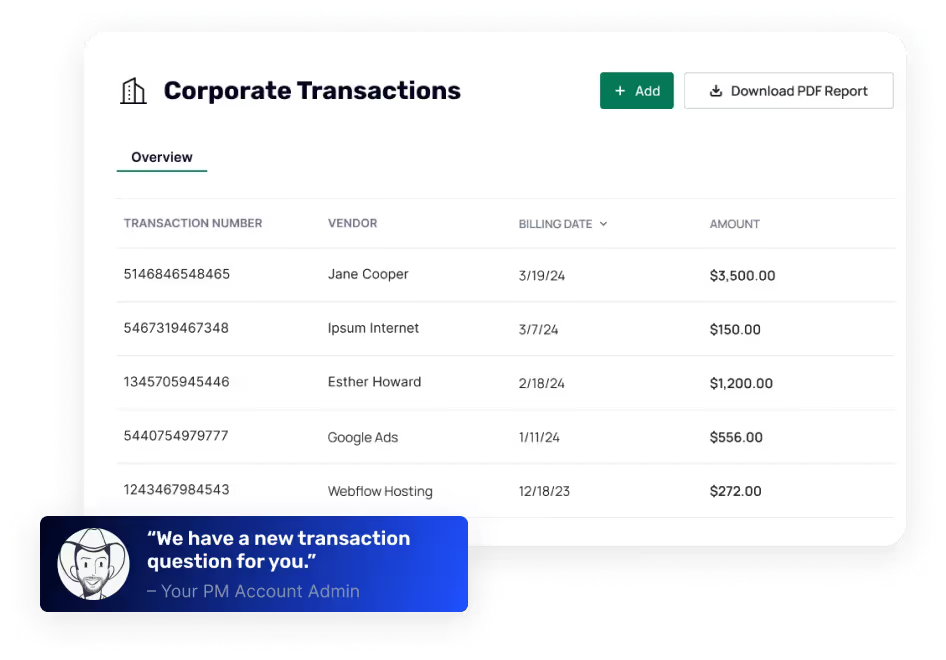
Corporate Accounting
Unlike trust accounting, corporate accountingtracks your management company’s own revenue and expenses — payroll, marketing, software, and overhead. The key is keeping it completely separate from trust funds to stay compliant and maintain clean records.
How To Build a Strong Accounting System
Dedicated Bank Accounts
Separate trust and corporate accounts
Organized Chart of Accounts
Clearly defined categories for income and expenses
Accrual vs. Cash Basis
Choose the reporting method that fits your needs
Monthly Close Process
A standardized checklist for reconciliations and reporting

Essential Reports Every Property Manager Needs
Your reports tell the story of your business performance. Key reports include:
Owner Statements
Show income and expenses for each property
Rent Roll
Track occupancy and potential collections
Balance Sheet & P&L
Measure financial health
Cash Flow Report
Monitor liquidity
Tenant Ledgers
Provide a complete history of charges and payments
With accurate, up-to-date reports, you can make better decisions and give owners the transparency they expect.
Property Management Accounting Software
Most property managers rely on specialized platforms to handle trust and corporate accounting. We work with:
AppFolio
Buildium
Propertyware
Rentvine
QuickBooks
At APM Help, our team has deep expertise in each of these systems— helping you clean, optimize, and manage your books inside the software you already use.

FAQs
What is property management accounting?
It’s the process of managing trust and corporate finances for rental properties and management companies to ensure compliance, accurate reporting, and audit readiness.
What is a three-way reconciliation?
It’s the process of matching your bank balance, general ledger, and property subledgers to prove every dollar is accounted for.
What reports do property managers need?
Owner statements, rent rolls, balance sheets, profit and loss, and tenant ledgers are essential for financial clarity.
What’s the difference between trust and corporate accounting?
Trust accounting manages tenant and owner funds, while corporate accounting manages your business’s operating finances.
Why Work With APM Help
Since 2017, APM Help has specialized in property management accounting. We’ve built our reputation on:
A 100% trust-audit pass rate
Expertise in AppFolio, Buildium, Propertyware, Rentvine, and QuickBooks
A team dedicated to property managers — not general bookkeeping
Clean books and guaranteed compliance
With us, you don’t just stay on top of your accounting — you stay ahead of it.
Book your free 30-minute consultation today and let’s get your books clean.